Migrants go through a difficult reintegration process after returning to their homeland. After imigration, they often lack social connections, are unaware of the labor market requirements, and do not have sufficient resources to start income generating activities. These factors increase the risk of unsuccessful return and push some to re-imigrate, which leads to negative consequences for the country. Therefore, targeted support is critical to help them effectively establish themselves locally.
In this context, CHCA, in cooperation with the Swiss office of the partner organization ISS, has been implementing the program “Reintegration of Migrants Returning from Switzerland” for 15 years. In the first quarter of this year, the 8th case was successfully implemented within the program. Nata’s story clearly shows how important such initiatives are for the full inclusion of returning citizens in the social and economic life.
Before leaving Georgia, Nata lived with her family in the city of Zugdidi, where she had many years of experience working in a children's clothing store. This experience later proved to be important when she started an income-generating activity to strengthen her sources of income, which provided a solid foundation for her professional skills.
After returning to her homeland, Nata was given a unique opportunity to get involved in a project initiated by the International Social Service (ISS) and CHCA, which aims to effectively re-integrate migrants returning to Georgia from Switzerland and create new beginnings for them. This program provides both financial and advisory support to help beneficiaries adapt and self-realize.
As part of the reintegration program, Nata was provided with material support in the amount of 4,700 Swiss francs, which turned out to be critically important for the realization of her idea and obtaining initial capital. Through the resources allocated, CHCA purchased a variety of children's clothing and accessories for Nata, thus laying the foundation for her own store. As a result of this targeted support, Nata continues to successfully operate. Her children's clothing store has not only become financially stable but also enjoys great popularity and trust in the local community, thereby contributing to the economic development of the region and creating an exemplary precedent for other re-integrators.
This success story once again emphasizes the potential of returned migrants and the need to support them for the sustainable development of the country
- +995 322 944 544
- communications@chca.org.ge
KUTAISI
Tel.: +995 577 960 444
E-mail: communications@chca.org.ge
TBILISI
Tel.: +995 577 960 444
E-mail: communcations@chca.org.ge
GORI
Tel.: +995 577 960 444
E-mail: gori@chca.org.ge
ZUGDIDI
Tel.: +995 577 960 444
E-mail: zugdidi@chca.org.ge
Vil. RUKHI
Tel.: 032 2 152 911
E-mail: hotline@chca.org.ge
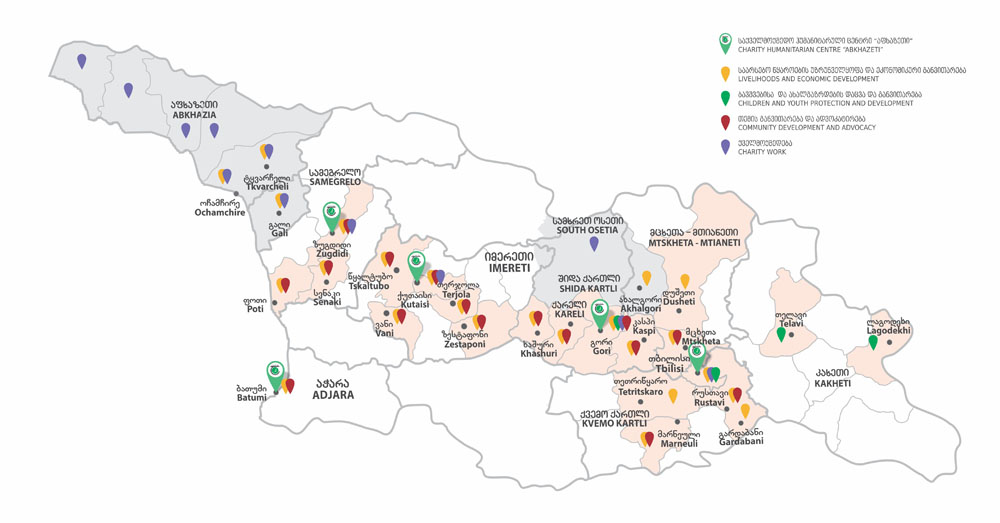
Where We Work